Showing posts with label Etching. Show all posts

Tuesday, August 9

Munch's The Kiss: "I try to dissect souls"


Right: The Kiss, 1895. etching
Left: The Kiss, 1897. painting
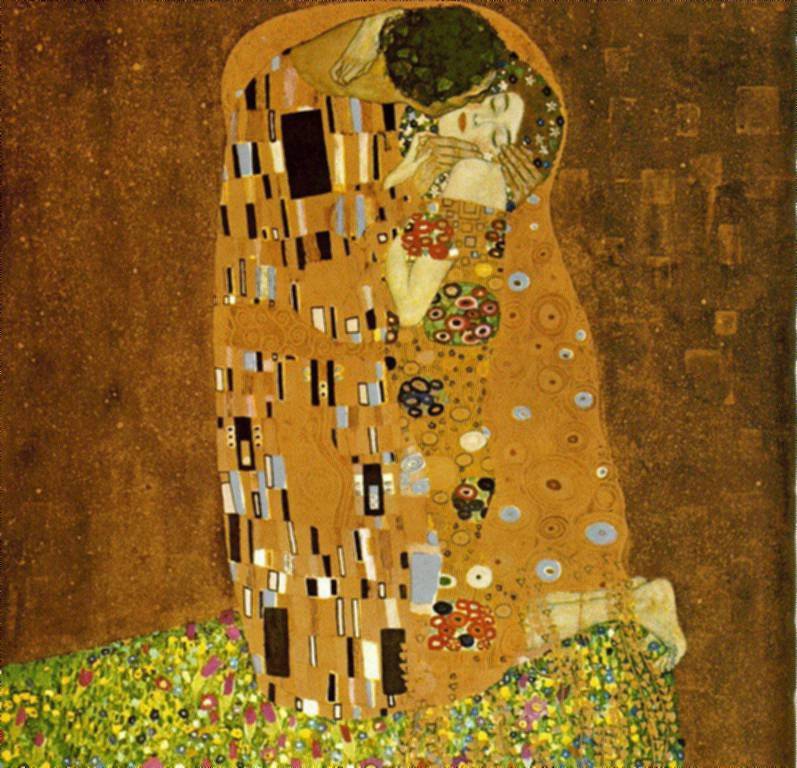
These are two versions of Munch's "The kiss" that inspired Gustav Klimt's famous painting with the same title.
Some of Munch's quotations explain not only his intentions, and the expressionist attitude, but also distance him from impressionism:

"No longer shall I paint interiors, and people reading, and women knitting. I shall paint living people who breathe and feel and suffer and love."

"Certainly a chair can be just as interesting as a human being. But first the chair must be perceived by a human being... You should not paint the chair, but only what someone has felt about it."

"Just as Leonardo da Vinci studied human anatomy and dissected corpses, so I try to dissect souls."
"I do not paint what I see, but what I saw."
Edward Munch

Sunday, November 22

Francisco Goya - 'The dream/sleep of reason produces monsters"


 This is "The Dream of the reason produces monsters", 1797, one of the eighty etchings entitled "Los Caprichos", published in 1799. It is always so hard to know which was the original intention of some artist's work and numerous theories are used to explain not only the intention but also the meaning and many other aspects. As you heard at the 1.28 minutes video* "sueño" means "dreams" and "sleep" in Spanish but I'm sure he meant "dream". This is one of his quotes:
Fantasy, abandoned by reason, produces impossible monsters; united with it, she is the mother of the arts and the origin of marvels.”
Artists think so much about their works that sometimes it is hard to think of them as being part of the society and I am telling this because I know painters and writers. I am not denying that they do and some of them do political statements intentionally.

There are many ways to approach an artist. Some takes the biography as the measurement; others the historical period; others the economical aspect of their own thinking; the philosophical approach; the aesthetic and it goes and goes... Even a medical approach is done in Goya's case because he had a disease when he was forty-five years-old that left him deaf. Like Van Gogh he also became a kind of medical puzzle because the symptoms he suffered can be related to a huge array of diseases.

Anyway.... I like to read the most important works by scholars or art lovers and just keep in mind a vague memory of them. Reading different authors approaching a work helps me keeping the excitement I had when I first saw the work and I can also appreciate the other phases of the artist the has nothing to do with only one approach. Goya also painted amazing women and delightful scenes. I like both equally. I love being a dilettante. Dilettante, synonymous amateur, is a word of Latin origin "dilectare"... delight. “Fools are not Foolish.” Francisco Goya "Painting is such a joy for me." Vincent Van Gogh *You can find one video explaining the whole series and some other prints here. Update: This post I promised yesterday when I talked about Piranesi.


Saturday, November 21

Giovanni Battista Piranesi - Impossible and imaginary structures being studied by architects

Giovanni Battista Piranesi, 1720-1778, was an Italian whose engravings and etchings of Rome and imaginary structures are being studied now by universities. However in an exhibition of his work in the Carnegy Museum of Art, the public was invited to use a magnifying glasses to see the details. It sounds contradictory but still at the same exhibition photographies of Pittsburgh were displayed:
" These dramatic photographs of the Allegheny County Court House bare a striking resemblance to some of Piranesi’s imagined architecture. The photographs, by Clyde Hare, show just how relevant these ancient etchings are." “Despite being an old master, Piranesi’s fantasy environments will likely resonate with today’s audience,” says Amanda Zehnder, assistant curator of fine arts and organizer of Giovanni Battista Piranesi. “Contemporary imaginary virtual reality, aesthetics of electronically or digitally constructed experiential and social environments, and even the aesthetics of horror, recall Piranesi’s work."
The creator of imaginary never-ending staircases and chains still influences artists, architects, psychologists and other fields of knowledge. I believe you can understand now what is the meaning of "piranesian" at the post below. Images: Two of the fifteen Carceri's (Prisons) series Piranesi published. You can see them all here. It is very interesting to see Piranesi this way because he was considered to influence Surrealism. I never thought it was very fair. Not everything that deals with imagination is so detached from reality and has to be related to surrealism. "The dreams of the reason produces monsters." Goya wrote once which will be the next post.